
Introduction
A successful ODI chase is rarely about scoring quickly from the first over. Teams usually manage their innings according to wickets remaining, pitch conditions and the target required. For cricket followers using Reddyanna, understanding how the required run rate changes during a chase can make ODI match situations much easier to interpret. A manageable rate early in the innings can rise rapidly if batters consume too many dot balls or lose wickets at important stages.
Required run rate gives a simple picture of how quickly the chasing team must score to reach its target within the remaining overs.
What Is Required Run Rate?
Required run rate, often shortened to RRR, represents the average number of runs a team must score per over from the current point of the chase.
For example, if a side needs 120 runs from 20 overs, the required rate is 6 runs per over. If several quiet overs follow, that figure may rise even when no wickets fall.
Users following an ODI through Reddy anna book should therefore look at both the current score and the number of deliveries remaining rather than focusing only on the original target.
How the Required Rate Changes During a Chase
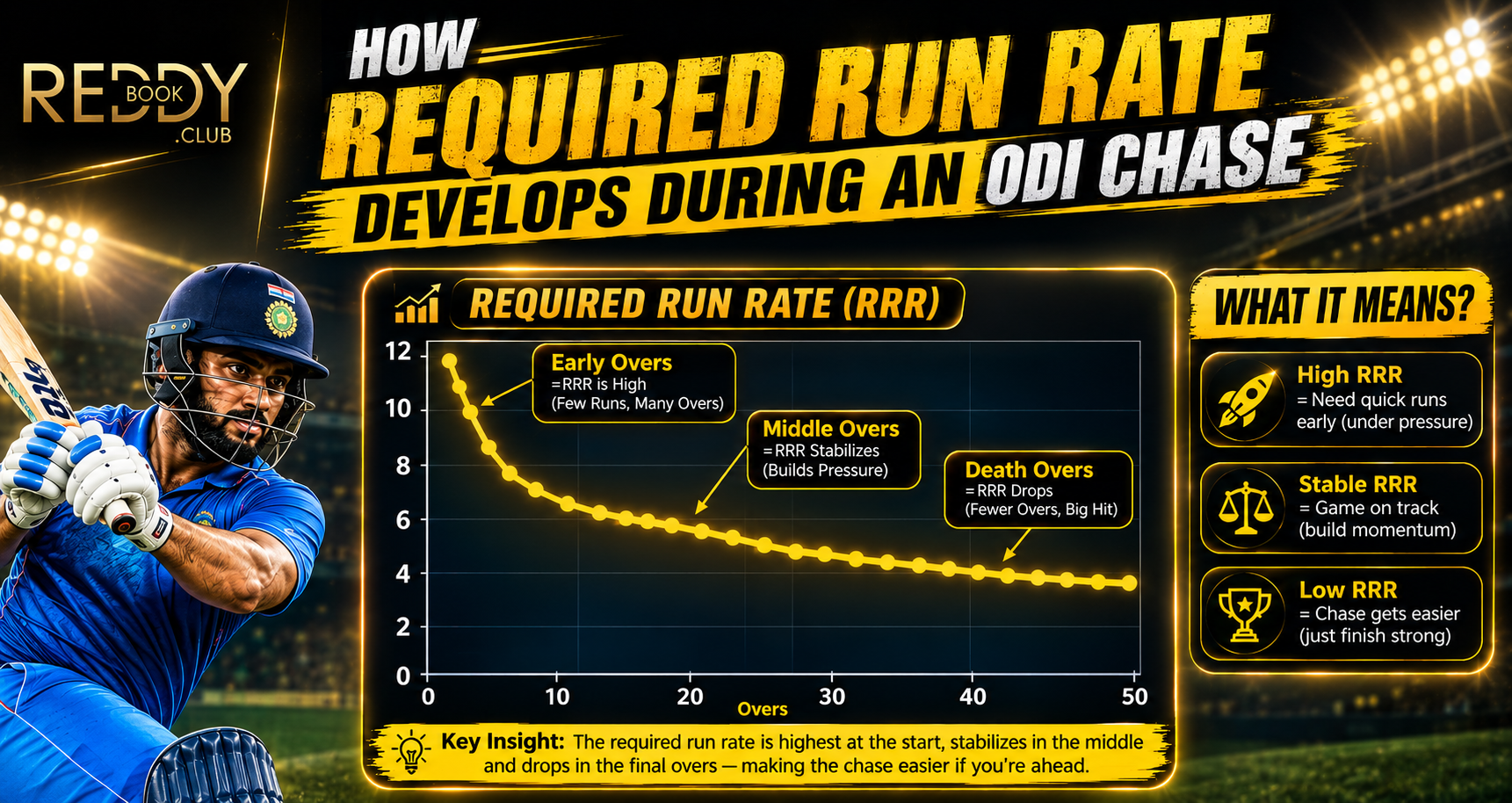
The required rate develops continuously throughout the innings. Every run scored reduces the remaining target, while every ball used reduces the time available.
Several situations can push the rate higher:
- Consecutive maiden or low-scoring overs
- Frequent dot balls
- Wickets that slow the scoring tempo
- Strong middle-over bowling
- Batters taking time to rebuild partnerships
On the other hand, boundaries and productive partnerships can bring the rate back under control.
Powerplay Overs Can Shape the Chase
The opening ten overs can establish the foundation of an ODI chase. Teams do not always need to attack aggressively, but a positive start can prevent the required rate from becoming uncomfortable later.
For readers checking match progress through Reddy book, it is useful to compare the scoring rate with the required rate. A team scoring at 5.5 runs per over while needing 6.5 may appear comfortable initially, but the gap becomes more important as fewer overs remain.
Why Wickets Matter Alongside Run Rate
Required run rate alone does not explain the full match situation. A team needing eight runs per over with eight wickets remaining may be in a stronger position than a team needing seven with only three wickets left.
That is why Reddy anna book followers should also consider:
- Number of wickets remaining
- Quality of batters still to come
- Current partnership
- Opposition’s remaining bowlers
- Pitch behaviour
- Boundary dimensions
A rising rate becomes much more difficult when the batting side is also losing wickets.
Middle Overs Often Decide the Pressure Level
Between roughly overs 11 and 40, teams often try to rotate strike while preserving wickets for the final phase.
If batters allow too many dot balls during this period, the required rate can quietly rise from a comfortable six per over to eight or nine. That increases the pressure on the finishing batters.
A Reddy book user should therefore pay attention to strike rotation rather than judging progress only by boundaries.
The Final 10 Overs Change Everything
The last ten overs usually produce the clearest run-rate pressure. If a team needs 90 runs from 60 balls, the required rate is nine per over. A single expensive over can reduce that pressure significantly, while two tight overs can push it above ten.
Factors that become particularly important include:
- Set batters at the crease
- Number of wickets remaining
- Death-bowling quality
- Required boundaries
- Ability to rotate strike
The closer the chase moves toward the final overs, the more important every delivery becomes.
Common Mistakes When Reading a Chase
Users should avoid:
- Looking only at the current run rate
- Ignoring wickets remaining
- Assuming one big over guarantees control
- Forgetting which bowlers still have overs left
- Judging the chase too early
- Treating required rate as a prediction of the final result
The figure is useful, but it should always be interpreted alongside the wider match situation.
Conclusion
Required run rate develops throughout an ODI chase because both runs and remaining deliveries constantly change. A team can keep the chase manageable through partnerships, strike rotation and timely boundaries, while wickets and dot-ball pressure can quickly make the target more difficult.
The best way to understand an ODI chase is to combine required rate with wickets remaining, batter quality, bowling resources and pitch conditions. No single statistic guarantees the result, but following these factors together provides a clearer picture of how the chase is developing.
FAQs
What does required run rate mean in ODI cricket?
It shows the average number of runs per over the chasing team must score to reach its target within the remaining overs.
Can required run rate decrease during a chase?
Yes. Productive overs and boundaries can reduce the number of runs needed relative to the balls remaining.
Why are wickets important when judging required run rate?
A team with more wickets remaining usually has greater freedom to attack as the required rate increases.
Is a high required run rate always impossible to chase?
No. Strong finishers, favourable conditions and expensive bowling overs can quickly change the equation.